Selling a North Bergen Condo? New Jersey Just Moved a Board's Paperwork Onto Your Closing Checklist
August 27, 2026
August 27, 2026
Two condo sellers list in North Bergen the same week. One owns a unit in a full-service high-rise tower on Boulevard East, the kind with a concierge desk and a pool deck perched on the Palisade cliff overlooking the Hudson. The other owns a unit in a six-family garden-style building two blocks off Kennedy Boulevard, the kind with a shared boiler and a small parking lot. Same township, same closing timeline in mind, same assumption that the reserve fund is the board's business and not theirs.
By the time either one gets to attorney review, that assumption may already be wrong. New Jersey's Structural Integrity and Reserve Law, first signed in January 2024 and amended again in August 2025, has quietly turned a board-level financial document into something a seller may be legally required to hand a buyer before the contract is even signed. And the two buildings above don't carry the same exposure. Knowing which one you own, and what your board has or hasn't done, is now part of getting a North Bergen condo to a clean closing.
New Jersey passed its Structural Integrity and Reserve law in the wake of the 2021 Surfside condominium collapse in Florida, requiring condo and co-op associations statewide to commission a capital reserve study with a 30-year funding plan, and requiring certain buildings to undergo periodic structural inspections by a licensed engineer. Associations that hadn't completed a qualifying reserve study in the five years prior had until January 8, 2025 to get one done. That deadline is now more than a year behind us, which means any North Bergen association still without a current study is already out of step with state law.
For its first year and a half, this was almost entirely a board and management-company problem. Owners might hear about it at an annual meeting. Sellers had no specific statutory role in it at all.
That changed on August 21, 2025, when Governor Murphy signed S3992, an amendment that gave underfunded associations a temporary escape valve and, in the same breath, attached a disclosure duty directly to unit owners who sell while that valve is in use.
The 2025 amendment lets an association fund its reserves at 85% of what its own reserve study recommends, instead of the full amount, for up to five fiscal years from the date the board makes that election. It's meant to give boards room to phase in higher dues rather than hitting owners with a shock assessment all at once.
The tradeoff is transparency, and it's specific. A board that elects the 85% option has to send every owner a notice, printed in at least 20-point bold font, stating that the association chose to fund reserves below the recommended level. If a special assessment or loan is anticipated because of that shortfall, the notice has to say what year and roughly how much.
Then the disclosure duty extends past the board. Any owner who sells a unit while the association is in that 85% window has to give the buyer a copy of that same notice before the contract closes. This isn't a courtesy disclosure real estate agents build into their own paperwork out of caution. It's written into the amended statute itself, and it means the seller, not the board, is the one on the hook if it doesn't happen.
Here's where the two sellers above split. The reserve study and funding disclosure rules apply broadly, to nearly every condominium, cooperative, and PREDFDA-governed planned development in the state with more than $25,000 in shared capital assets, which covers almost everything from a small six-unit building to a high-rise tower. But the structural inspection piece of the law only applies to what the statute calls a "covered building," meaning one with a primary load-bearing structure of concrete, steel, or similar noncombustible construction. Wood-frame buildings are generally excluded from that part of the law.
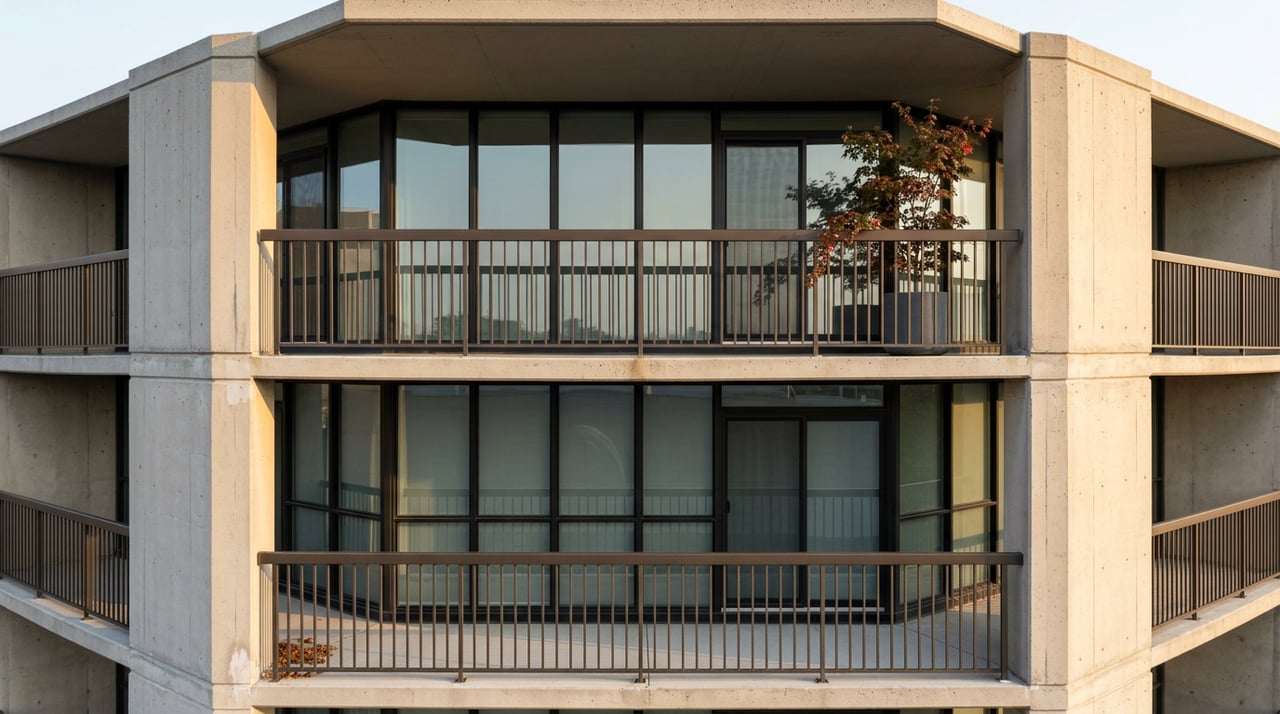
That distinction matters on the ground in North Bergen, where the housing stock along the bluff includes both full-service concrete high-rises, like the Parker Imperial on Boulevard East with its outdoor pool, sauna, and 24-hour concierge, and older wood-frame garden apartments converted to condos.
| Building type on the bluff | Structural inspection required | Reserve study and funding disclosure |
|---|---|---|
| High-rise tower, concrete or steel frame (Boulevard East–style) | Yes, by a licensed engineer, on a schedule tied to building age | Yes, including the 85% notice to buyers if underfunded |
| Garden-style or low-rise, wood-frame construction | Generally no | Yes, if the association is PREDFDA-governed with sufficient common assets |
A seller in a high-rise faces both halves of the law. A seller in a wood-frame garden building generally faces only the reserve and disclosure half. Either way, the reserve document exists somewhere, and either way, it's the seller's job to go find it.
The structural inspection reports required under the law get filed with the local municipal construction official, not published for public browsing, so a buyer or seller doesn't stumble across one casually. The reserve study itself typically lives with the property management company or the board treasurer. None of this shows up on a standard property listing, and none of it is the kind of thing a seller thinks to request until someone asks for it.
The someone who asks is often a mortgage underwriter. Fannie Mae and FHA condo project reviews look at reserve adequacy and any pending or anticipated special assessments before approving financing on a unit. If a seller's association is funding at 85% and hasn't produced the required notice, or if the reserve study is stale, that can surface during underwriting weeks into a contract, not during the walk-through. At that point a buyer's financing can stall, and a deal that looked routine needs a renegotiation or a delay nobody planned for.
There's one more detail buried in the law that catches boards and owners off guard together. If a structural inspection turns up work that has to be done to preserve the building's load-bearing system, the statute allows the board to levy a special assessment for that repair without an owner vote, regardless of what the association's own bylaws say. A seller who assumes "the board can't assess us without a vote" because that's how it's always worked in their building may be wrong the moment a structural engineer's report calls for corrective work.
None of this means a North Bergen condo sale is harder than it used to be. It means the order of operations shifted. The paperwork that used to surface during attorney review now belongs at the front of the process.
Doing this before the property is on the market means a buyer's attorney and lender see a complete picture from day one, instead of a mid-contract discovery that stalls a closing.
This is exactly the kind of local mechanics work Palmieri Properties handles for sellers along the bluff and elsewhere in North Bergen. Founder-led doesn't just mean the marketing carries a real name. It means someone who already knows which Boulevard East buildings are concrete high-rises, which associations have current studies, and which board notices need to be in a seller's folder before a sign goes in the yard.
Does this law apply to co-ops the same way it applies to condos? Yes. The statute covers condominium associations and cooperatives together, along with PREDFDA-governed planned developments, so a co-op seller on the bluff faces the same reserve study and disclosure questions as a condo seller.
How do I find out if my building is using the 85% funding option? Ask your property manager or board treasurer directly. The law requires the board to notify owners in bold, oversized print if it elects the 85% option, so if that notice went out, it should already be in your records or your management company's files.
What if my building already has a current reserve study and isn't underfunded? Then the disclosure requirement doesn't apply to you in the same way, but it's still worth confirming the study's date and getting written confirmation from the board before listing, since a buyer's lender may ask for it during underwriting regardless.
Ready to sort out what your building's paperwork actually says before you list? Palmieri Properties can walk through it with you. Schedule a Free Market Consultation.
Stay up to date on the latest real estate trends.


Get assistance in determining current property value, crafting a competitive offer, writing and negotiating a contract, and much more. Contact me today.